

Me, Myself & I
Look, read, question.
LeMuséeVirtuel.ch offers a way to extend the exploration of the themes addressed in the exhibitions through new informative, interactive, and playful content.
Quizzes, audio formats, artworks, testimonials, experiences, and prompts for reflection offer different ways to approach each topic, make new discoveries, and open up new perspectives.
Designed especially with young people in mind, but also for teachers, parents, and professionals, this content invites visitors to observe, question, interpret, and exchange ideas. Another way to explore the themes of the exhibitions, at your own pace and following your curiosity.
Topics covered

Self-image
Self-image refers to the way we see and represent ourselves. It can include different aspects of who we are: our appearance, our tastes, our qualities, our personal characteristics, or the place we feel we occupy among others.
This image is not fixed. It develops and changes over time through our experiences, our environment, and the way others see us.

Self-esteem
Self-esteem relates to the value and appreciation we give ourselves. It is connected to the way we view our qualities, abilities, achievements, and also our difficulties.
It can change throughout life and vary depending on experiences, situations, and contexts. Our family, social, and cultural environment can also play a role in how it develops.

Self and others
The way we see ourselves is also shaped through our relationships with others. Their looks, reactions, comments, and the comparisons we make can influence the image we have of ourselves.
Through these interactions, the way we see ourselves may evolve. Our self-image is therefore both personal and influenced by the world around us.


Who am I really? How do I see myself? How do others see me?
Do you have questions about how you perceive yourself and how others perceive you?
Take this quiz to see things more clearly! 👀
Quiz
Does the image I have of myself really reflect who I am?
This questionnaire invites you to explore different facets of your image through a series of short questions. It brings together self-confidence, the way you see yourself, self-esteem, and the way you position yourself in relation to others and to yourself.
For each question, choose the answer that best reflects how you feel at this moment. Answer honestly, without looking for an ideal response: the questionnaire is intended above all to open up a space for personal reflection.
The evolution of beauty standards over time
Throughout history, the perception of beauty has been shaped by multiple factors: religious beliefs, cultural traditions, artistic trends and emblematic figures. Each era has seen its own aesthetic ideals emerge, reflecting the aspirations and values of society.
The rise of mass media—from illustrated newspapers to television and then digital platforms—accelerated the diffusion of these standards. Public figures, models and celebrities played a central role in defining beauty standards, shaping trends and influencing individual perceptions.


Beauty and Ugliness

Art defies standards...
Art has always questioned, sublimated and deconstructed self-image.
Where the Renaissance sought harmony of features and anatomical perfection, Romanticism, Expressionism or contemporary art have given deformity, strangeness and imperfection an aesthetic power of their own. Ugliness then becomes a language, an expression of raw emotion, a mirror of inner torments and a denunciation of the dictates of appearance.
In a world where self-representation is omnipresent – from classical paintings to digital filters – art plays a vital role in questioning aesthetic norms and visual injunctions. It becomes a reflection of an era in all its complexity and contrasts.

In Untitled #646, Cindy Sherman digitally assembles fragments of her face to create new characters, exploring the malleability of identity.
Cindy Sherman
_jpg!PinterestSmall.jpg)
In La Reproduction Interdite, Magritte plays with perception by depicting a man seen from behind, who is nevertheless reflected in the same way in a mirror. Through this visual paradox, he questions identity, reality and illusion, defying the viewer's expectations.
Rene Magritte

In Virtual (2020), Jenny Saville superimposes fragmented faces in oil on canvas, exploring the fluidity of identity. Through layers of colour and shape, she creates a moving image, blurring the boundaries between figuration and abstraction.
Jenny Saville

In Misty and Jimmy Paulette in a Taxi, NYC (1991), Nan Goldin captures the raw energy of New York's queer scene. With natural light and striking intimacy, she immortalizes two drag queens in a taxi, blending glamour and realism to reveal their strength and vulnerability.
Nan Goldin
And you, what is your beauty ideal👀?
The ideal of beauty varies depending on physical criteria and what a person exudes...
Assign the adjectives that correspond to each photo below using a “drag and drop” system.
Make your choice and discover how your perception of beauty is expressed in words.
Quiz
And you, what is your ideal of beauty?
The ideal of beauty varies depending on physical criteria and what a person exudes...
Assign the adjectives that correspond to each photo below using a “drag and drop” system.
Make your choice and discover how your perception of beauty is expressed in words.
Reflection: the relationship to oneself in a world of screens
Self-image is a relationship we have with ourselves.
In the digital age, the mirror has become digital: selfies, filters, likes. We no longer simply look at ourselves; we stage ourselves, perfect ourselves and seek to please.
Authenticity sometimes gives way to an idealised version of ourselves, calibrated to appeal rather than to reflect reality. Every virtual interaction becomes a distorting mirror, in which the approval of others shapes our perception of ourselves.
Have we become so dependent on the gaze of others that we forget our own view of ourselves? Can we exist without digital validation? Behind the screen, who are we really once the filters are removed?

Selfies
Humans have always shaped and captured their image, seeking to mold it according to their own vision or the one they want to project. From yesterday's self-portrait to today's selfie, has self-representation really changed?
Isn’t the selfie simply the modern heir to this quest, democratized by technology? With one click, we choose the perfect angle, the flattering pose, the ideal filter. Each selfie becomes a mastered version of ourselves, a sculpted fragment of identity. For whom?
How many likes to exist?
Likes are no longer just clicks: they have become a social measurement unit, an instant validation, a popularity barometer, a gauge of attention. The more they accumulate, the more self-esteem seems to be reinforced. Conversely, a post that goes unnoticed can generate frustration, disappointment, or even a feeling of isolation.
On social media, getting attention is a constant game. Every like is a sign of recognition, a signal that you exist in the eyes of others.
But how far does this quest go? Is it motivated by the simple pleasure of sharing or by the pressure to compare and compete? In this virtual competition, where we scrutinize and gauge ourselves, do likes boost motivation or fuel stress? And above all, are they really a reliable measure of our value?


Mirror, filters, likes & AI... Where do you really stand? Take the test 🚀
Quiz
Between the mirror, the filters, and the gaze of others, where is my true face?
This questionnaire explores the relationship between your self-image, your reflection, and the representations of yourself influenced by filters, screens, and external perspectives. It examines how images sometimes alter how we feel about ourselves.
Read each statement and answer according to what feels most natural to you. Do not try to analyze or correct your answers: the goal is to identify patterns in your relationship with the mirror, your image, and your self-perception.

Perfection?
Per-fake-tion
Are we still able to distinguish between real and fake? In the era of filters, retouching and artificial intelligence, the line is blurring. Growing up in a world of smoothed and reshaped images blurs the boundaries and redefines aesthetic standards.
Today, perfection is created in an instant. A filter, a click, and everything changes: sculpted cheekbones, refined nose, dazzling teeth, flawless skin, refined waist, elongated legs, enhanced chest. But behind the screen, what remains of us?
Social networks impose an unattainable ideal where appearance becomes an obsession. Artificial intelligence generates avatars with perfect contours, shaping a standardized and disembodied beauty. The gap between the filtered, prompted image and reality fuels complexes and dissatisfaction, pushing a growing number of people to resort to cosmetic surgery.
Before giving in to this frantic race towards artificial perfection, one question remains essential: who are we really trying to please? Behind each transformation, there are expectations to understand, pressures to question.

.jpg)
-original.jpg)


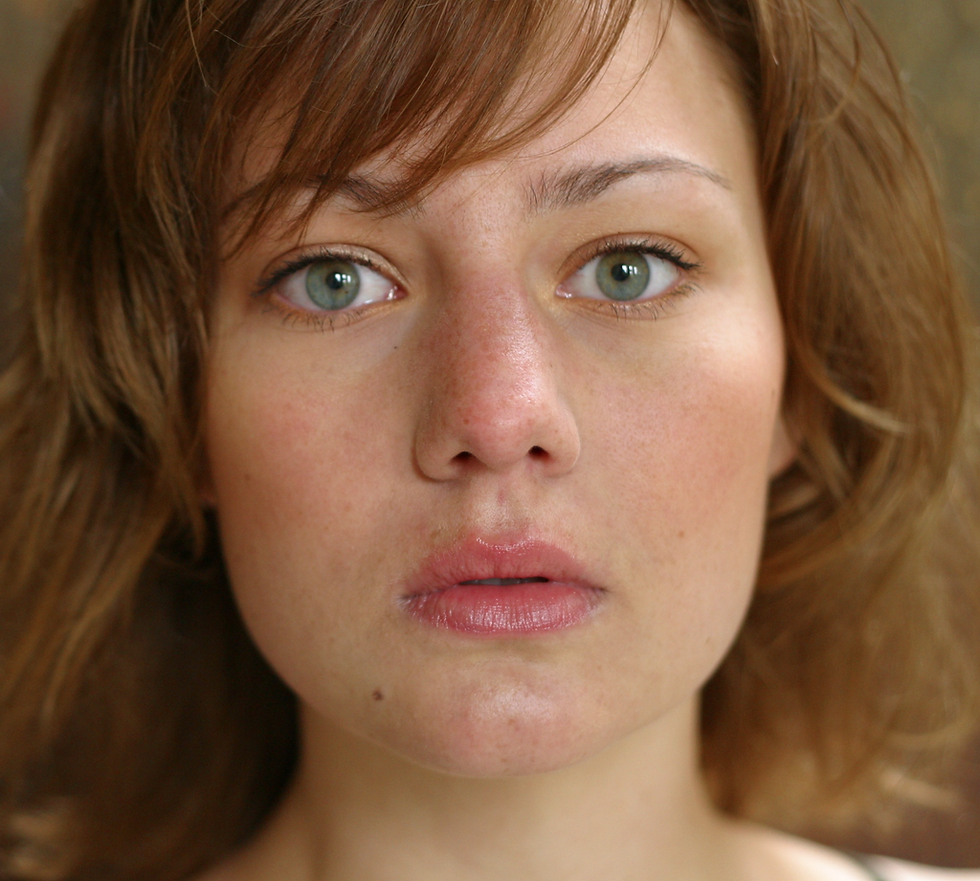
And you? How do you feel 🤔about the images of "perfection" that you see on social networks📸?

Comments:
10/10
Dazzling as always! ✨
OMG, always on top 😍🔥! What's your secret to being so photogenic?
10/10
The very definition of perfection 😍
Teach us your ways, master of posing 📸🔥!
10/10
A look that everyone agrees on 👗🔥
This outfit >>>>> perfection 😍👌! Where did you find that?
Who influences whom?
As new players in the digital world, influencers reign supreme. They capture attention, shape trends and dictate, sometimes without even realising it, what is “in” or “out”.
Measured in likes, followers and comments, they share their daily lives, offer advice, promote products and set standards. Their influence extends beyond the screen: what they wear, what they say and what they recommend seeps into popular culture, from office conversations to school playgrounds.
The expectations of their audience, pressure from brands, the pursuit of engagement… do all these factors ultimately begin to dictate their choices, their opinions and their own image? So who really holds the power? The influencer, who shapes opinion, or the influenced, who, through their reactions, expectations and engagement, ultimately begin to shape those who guide them?
Influence can inspire, bring people together and raise awareness… but it also requires perspective, a critical eye, the ability to question, not to follow blindly, and to form one’s own opinion.


Inclusivity & Diversity
Long dictated by rigid canons, beauty is now experiencing a revolution. Inspired by the body positivity movement, this new momentum advocates a liberated and inclusive vision. Far from a uniform ideal, it redefines standards by valuing singularity and diversity in all its forms.


01
One body, a thousand possibilities
The body is no longer a fixed model, but a space of expression where perfection lies in imperfection. Inclusivity and diversity are taking hold in media, fashion, advertising and social networks, breaking the dictates of yesterday to pave the way for a more authentic representation regardless of size, body shape, skin color or gender identity.

02
A digital and cultural revolution
Social networks and communication campaigns are embracing this evolution by multiplying positive messages. Committed hashtags (#RepresentationMatters, #BodyConfidence, #AllBodiesAreBeautiful), unretouched photos, models with varied physiques… so many initiatives that shake up the codes and encourage self-acceptance. Brands themselves are adapting, integrating more and more diversity into their campaigns to better reflect the richness of the real world.

03
Towards a new definition of beauty
Far from being a simple trend, this reconsideration of beauty marks a profound transformation of mentalities. Celebrating each body means deconstructing limiting standards to reinvent a more human, more inclusive, and above all, freer ideal.
Quiz
What does my body tell us about myself, beyond words?
This questionnaire offers an exploration of your relationship with your body through several essential dimensions of self-image. It addresses physical perception, inner dialogue, personal expression, confidence, social recognition, and bodily sensations.
Answer each question by choosing the option that best describes you today. Treat the questionnaire as a moment of self-reflection: proceed at your own pace and let your first impression guide you.
Disorders
Self-image is a complex construct, influenced by our experiences, our environment, our emotions, and the way others see us. It evolves over time and may vary depending on different stages of life, situations, and contexts.
For some people, the relationship with their appearance or their own image can become a source of discomfort or questioning. The way we see ourselves may then affect self-esteem, our relationship with our body, or the way we present ourselves to others.
In an environment where many models, norms, and representations of the body and appearance circulate, our perception of ourselves can also be influenced by what we see and what we compare ourselves with. Eating disorders, body dysmorphic disorder, or difficulties related to self-image are among the realities that show how complex and changeable our relationship with our own image can be.

Eating disorders: a conflicting relationship with the body
Eating disorders, such as anorexia, bulimia or hyperphagia, reflect deep suffering linked to self-image and body perception. Marked by extreme eating behaviors and a quest for control, they often reveal a malaise rooted in the fear of not corresponding to an ideal, the rejection of one's own reflection
Social anxiety
Intense fear of judgment, of the gaze of others, of not being up to par, social anxiety is accompanied by a feeling of inferiority and hyper-awareness of self, which can lead to avoidance of interactions and isolation.
State of malaise, depression & suicidal thoughts
Poor self-image, negative self-perception, or low self-esteem can be contributing factors in the development of depressive symptoms. When combined with other stressors or emotional distress, they can also lead to suicidal ideation and depression.
Talk about it
Self-image is complex and can be influenced by many factors. The disorders mentioned here can also be linked to other problems and have serious consequences on mental and physical health.
If you or someone you know is experiencing signs of emotional distress, eating disorders, anxiety, depression, or other issues, don’t be alone. Talk about it! Get help! There are professionals and resources to help manage these challenges.
Altered perception
Other disorders may also be related to an altered perception of self. Body dysmorphic disorder, for example, is an obsession with an imagined or exaggerated body defect that leads to significant distress and compulsive behaviors. Dissociation, on the other hand, is manifested by a feeling of detachment from oneself, as if one were a stranger to one's own body or existence.
Do you know how to listen to yourself? ✨
Anxiety, stress, digital overload… Do you recognize the signs? 💡
🌍 When the weight of digital becomes too heavy, do you know how to take a break? Do you dare to talk about it, ask for support?
Quiz
Who am I when I truly look at myself?
This questionnaire invites you to explore how you perceive your body, your appearance, and your presence in daily life. It highlights different dimensions of self-perception, including intimate feelings, self-image, and relationship with the body.
Read each statement and choose the answer that best reflects your spontaneous experience. There are no right or wrong answers: simply respond honestly and intuitively to gain an overall understanding of your self-perception.
And also …


Testimonials
Some testimonials from young people on their relationship with self-image in the context of the themes addressed in the exhibition.

Podcasts
Some podcasts that address topics related to self-image
01
02
03
04

Self-image, self-esteem and reputation

"Mille Pertuis", by Julia Thévenot: an invitation to listen to your body
Expérience sociale : le physique ça compte - CRASHTESTTataki
Chirurgie esthétique, faut qu'on en parle - YADEBAT
Tataki
Anorexie, boulimie : quand la nourriture est ton ennemie - YADEBAT
Tataki
Est-ce que tu mets des filtres sur tes photos Insta ? Tataki
Instagram mauvais pour ta santé mentale ? - YADEBAT
Tataki
Est-ce qu'il faut être viril pour plaire ? - YADEBAT
Tataki

Tales & Fables
Tales and fables have always served to explore the complexities of human nature and to convey moral lessons. At the heart of these timeless tales evolve fascinating characters and animals, whose destinies are often woven around universal themes. Self-image, appearance and relationships with others are frequently addressed by storytellers. These timeless stories remain an inexhaustible source of inspiration, inviting reflection on self-perception within society.
This classic tale by Andersen tells the story of a swan who considers himself ugly because he does not look like the ducklings. In the end, he discovers his true identity and becomes aware of his inner beauty.

This story by the Brothers Grimm features a magic mirror that shows people their inner selves, revealing that inner beauty is more important than outward appearance.

The Magic Mirror
Andersen tells the story of a songbird born with an unattractive appearance, whose singing is so beautiful that he eventually comes to be appreciated for his voice rather than his looks.

The Nightingale
This famous story tells how Belle looks beyond the Beast’s appearance to discover the kindness that lies within.

Beauty and the Beast
In this fable by Aesop, a small mouse saves the life of a powerful lion. It shows that even the mightiest can need help, regardless of their size or strength.

The Lion and the Mouse
This fable by Andersen highlights how vanity and the fear of being different can influence our perception of ourselves and reality.

The Emperor’s New Clothes
This Indian tale tells the story of a cracked jar that felt useless because it leaked water along the path from the well. Its owner, a wise old man, showed it that, thanks to its leaks, flowers had blossomed along the path. The jar then realised that its imperfections had made the world more beautiful without it even knowing. It accepted its flaws and discovered its true worth.

The Broken Jar
In this fable by Jean de La Fontaine, a frog encounters an ox and, envious of its impressive size, tries to inflate its own body to resemble it. He bursts while trying to become something he is not. The moral of the fable teaches us that everyone should accept their own nature and avoid trying to be something they are not. It warns against envy and the desire to appear bigger or more important than we really are.

The Frog and the Ox
What they say


When the image sublimates reality… without distorting it!
#BeYourself
Filters and retouching have always existed, from classical painting to today's photographs. But when artifice takes over authenticity, the very essence of the subject is erased.
Your uniqueness is precious. Dare to show it without excessive digital correction.

Take control of your time!
#OfflineMatters
Balance is key! Set boundaries: between social time, time with others, and time in reality.
Disconnect, breathe, live!

Don't get sucked in! Get inspired!
#DigitalInspiration
A positive feed is a free spirit! Share your passions, your talents, your discoveries. Follow accounts that arouse curiosity, stimulate creativity and enrich you.
Shape your digital universe as a space of inspiration, not a distorting mirror!

Online respect, an art to cultivate!
#DigitalEthics
Every word, every interaction leaves a mark. Communicate with kindness, ban cyberbullying and negative comments.
Even behind a screen, words and actions have a real impact on our own emotions and those of others.

Real vs Virtual: Don't confuse the reflection with the original!
#Critical Mind
Like a trompe-l'oeil, digital can seduce, but it does not replace reality.
Don't get the wrong idea about the rules of the game: real life is played offline

To publish is to engrave!
#Digital Trace
Before posting, ask yourself: What resonance? What scope?
Master your image, protect your privacy — because once revealed, information can rarely be erased.