
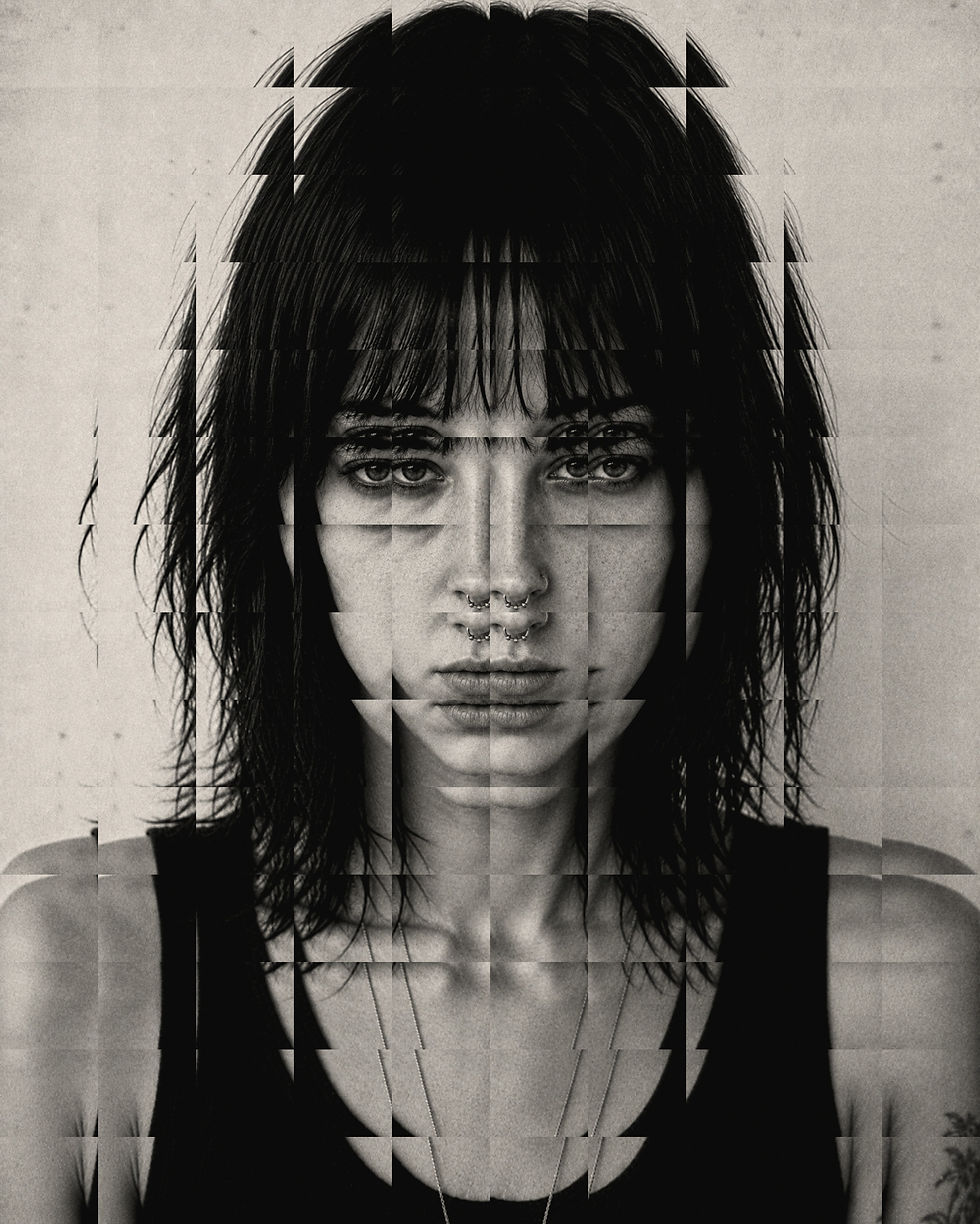
Echo Chamber
An interactive and participatory exhibition about self-image.
It invites visitors to explore how our image is shaped, transformed, and shared today.
About Echo Chamber
Installed in a container, Echo Chamber is an immersive exhibition offering a journey through a series of artistic and participatory installations that invite visitors to experiment, observe, and question their relationship with self-image.
Echo Chamber also extends into a virtual space, where visitors can discover additional artworks, content, and perspectives on how we perceive and represent ourselves.
Designed especially with young people in mind, the exhibition creates a space for discovery, reflection, and dialogue around how we see ourselves and how we choose to present ourselves to others.
Self-image plays a central role in the social, emotional, and digital lives of young people. It influences how they present themselves, compare themselves with others, assess their own worth, and seek recognition and a sense of belonging.
Today, an image is no longer simply a reflection. It is created, staged, shared, and constantly reinterpreted. It circulates, changes, and can sometimes escape the control of the person who created it, influencing not only how others see us, but also the way we see ourselves.
Through interactive experiences, artworks, and participatory installations, Echo Chamber brings to light mechanisms that can sometimes be difficult to identify. The exhibition explores questions of identity, the gaze of others, interpretation, and consent, inviting visitors to reflect on the images they create, transform, share, receive, and interpret.


Selfies, stories, filters, likes, comments: today, our image is constantly shared, transformed, and sometimes escapes our control. What do we choose to show? How do others see us? And how can we remain true to ourselves in a world where images play such an important role?
Echo Chamber explores the many influences that shape our self-image: the gaze of others, social media, our experiences, our emotions, social norms, and much more.

Echo Chamber: the container
An immersive and interactive exhibition presented in Zurich and Geneva, inviting visitors to explore self-image through installations, images and participatory experiences.

Echo chamber in the virtual world
An extension of the exhibition into the virtual world to discover the content differently, delve deeper into the themes addressed and continue the reflection at one's own pace.
Exhibition venues

City
Zurich
Place
Kunsthaus Zürich
Heimplatz
8001 Zurich
Date
September 10–20, 2026
Hours of operation
Tuesday, Wednesday, Friday–Sunday
10:00–18:00
THURSDAY
10:00–20:00
Closed on Mondays

City
Zurich
Place
Europaplatz, Zürich
Europaallee 2
8004 Zürich
Date
September 22–27, 2026
Hours of operation
Tuesday, Wednesday, Friday–Sunday
10:00–18:00
THURSDAY
10:00–20:00
Closed on Mondays

City
Geneva
Place
Maison de l'Enfance et de l'Adolescence (MEA)
Boulevard de la Cluse 26,
1205 Geneva
Date
October 7-18, 2026
Hours of operation
Monday – Sunday
10:00–18:00
Practical information
Visit duration
15–25 minutes
Languages
German | English | French
Admission
Free
Recommended age
13+
Group visits
School classes and groups by reservation
Selfies, stories, filters, likes, comments: today, our image is constantly shared, transformed, and sometimes escapes our control. What do we choose to show? How do others see us? And how can we remain true to ourselves in a world where images play such an important role?
Echo Chamber explores the many influences that shape our self-image: the gaze of others, social media, our experiences, our emotions, social norms, and much more.
Thanks
The content of this exhibition is the result of collaborative reflection and collective construction. It is based on numerous readings, references, studies and resources constituting a selection of information dealing with various aspects related to self-image.
We thank all those who participated in the creation of this exhibition for their valuable and generous contribution.

Partners


Support


We warmly thank the David Bruderer Stiftung and the Municipality of Dardagny for their valuable support, as well as all the technical teams, cultural mediators, volunteers, partner organisations, and everyone who contributed to bringing Echo Chamber to life.
Practical information
Concept and graphic design
Children Action
Scenography
Mouvement Studio × Matthieu Girel
Digital development
Mouvement Studio
Production
StandConcept